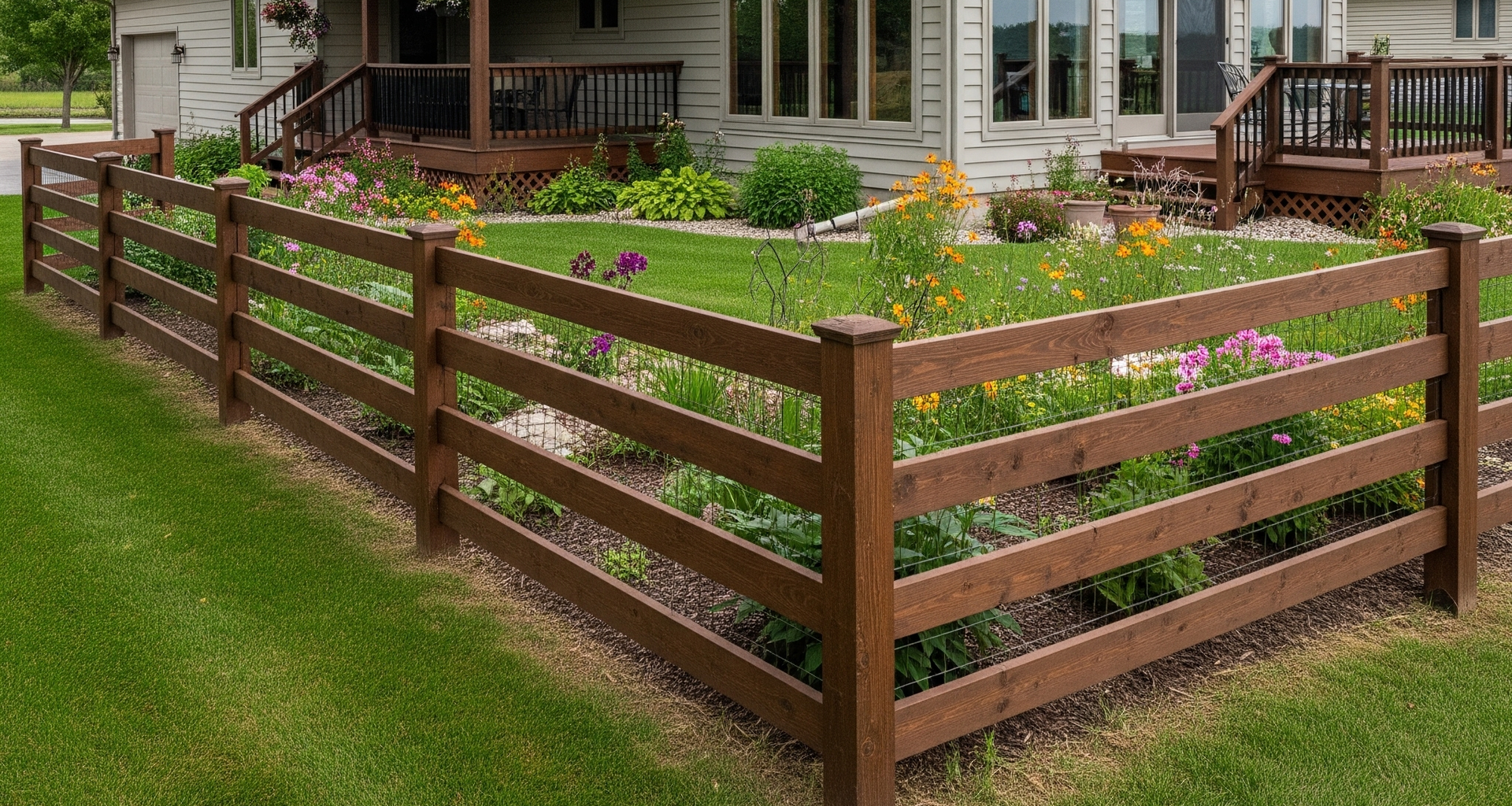
Best Fencing Solutions for Pet Owners: Height, Picket Spacing, and Durability
Learn how the right fence height, spacing, material, and gate design can create a safer and more secure yard for pets in West Allis, WI.
For many homeowners, a backyard fence is more than a property boundary. It can give dogs a place to play, keep pets away from busy streets, and provide peace of mind when they are outside. But not every fence is equally effective for keeping pets safely contained.
A fence that works well for one dog may not work for another. A small dog may squeeze through openings that seem insignificant, while a larger or more energetic dog may be able to jump over a fence that looks tall enough.
If you're planning a new fence in West Allis, WI, it helps to think about your pet's size, behavior, and habits before choosing a fence style.
Start With Your Pet's Behavior
The right fence starts with understanding the animal you're trying to contain.
A calm, small dog may only need a relatively simple boundary. A large or energetic dog may require greater height, smaller openings, and a stronger structure.
Ask yourself:
- Does your dog jump?
- Does your dog dig?
- Does your pet squeeze through small openings?
- Does your dog tend to climb?
- Is your pet reactive toward people or other animals?
- Will multiple pets use the yard?
- Does your pet spend extended periods outdoors?
These details can affect everything from fence height to material selection and gate design.
Choose the Right Fence Height
Height is one of the first things pet owners should consider.
A fence that is too low may be easy for an athletic dog to jump. A taller fence can make escaping more difficult, particularly when combined with an appropriate layout and minimal footholds.
However, taller does not automatically mean better. The appropriate height depends on the pet, property, fence style, and local requirements.
For residential properties in West Allis, the city's current fence guidance states that fences in side and rear yards can be up to six feet high. Fences are generally not permitted in required front-yard setbacks, and fences in designated vision triangles are limited to three feet.
That means homeowners should consider local regulations before selecting a fence height.
Pay Attention to Picket Spacing
Fence height is only one part of pet containment. The spaces between pickets, rails, or other fence components are just as important.
A small dog may be able to fit through an opening that a larger dog cannot. Puppies can also grow into surprisingly capable escape artists.
When choosing a fence, consider:
- Your pet's head and body size
- The width of openings
- Horizontal rails that could be used for climbing
- Gaps beneath the fence
- Areas where the ground slopes
- The placement of gates
A fence professional can help you select a design that provides appropriate spacing for your pet.
Don't Forget the Gap at the Bottom
A perfectly sized fence can still fail to contain a pet if there is a large opening underneath it.
This is particularly important when the yard is uneven or slopes away from the fence. Dogs that like to dig may also create their own escape route.
During installation, the bottom of the fence should be planned with the property's terrain and your pet's behavior in mind.
If your dog is a digger, discuss this before installation rather than trying to solve the problem after the fence is already in place.
Choose a Durable Material
Pets can be surprisingly hard on fences. Dogs may scratch, jump against, lean on, or chew portions of a fence.
The right material depends on your budget, desired appearance, maintenance expectations, and the type of use the fence will receive.
Wood Fencing
Wood offers plenty of design flexibility and can provide a traditional, natural appearance.
For pet owners, wood can be designed with relatively small spacing and solid sections when additional privacy or containment is desired. Individual boards can also be replaced if a section becomes damaged.
Regular maintenance is important because outdoor wood is exposed to moisture, sunlight, and changing weather conditions.
Vinyl Fencing
Vinyl fencing offers a clean appearance and generally requires less routine maintenance than wood.
Solid vinyl privacy fencing can also limit visual distractions, which may be useful for dogs that become excited when they see people, pets, or traffic outside the property.
The specific design should still be selected carefully to ensure that the fence provides the containment your pet needs.
Aluminum Fencing
Aluminum fencing can provide an attractive, open appearance while creating a defined boundary.
Its open design can be useful when homeowners want to preserve visibility between the yard and surrounding property. However, pet owners should pay close attention to the spacing between rails and pickets.
For smaller dogs, a decorative fence with wide openings may not provide adequate containment.
Think About Your Dog's Line of Sight
Some dogs become more anxious or reactive when they can constantly see activity outside the yard.
If your dog barks at pedestrians, neighboring pets, passing vehicles, or wildlife, a more solid privacy fence may help reduce some visual triggers.
On the other hand, some homeowners prefer an open fence because they want their pets to be able to see the surrounding yard and neighborhood.
There is no single fence style that works for every pet. The important thing is to match the fence design to how your dog actually behaves.
Make the Gate Just as Secure as the Fence
The gate is often the weakest point in a pet fence.
Even if the fence itself is secure, a gate that does not close properly can give your pet an easy escape route.
Check that the gate:
- Closes completely
- Has a secure latch
- Does not leave a large gap underneath
- Swings freely without dragging
- Is positioned where it will not interfere with landscaping
- Is appropriate for the size and behavior of your pet
If your dog is particularly good at opening gates, talk with your fence installer about a more secure latch or gate configuration.
Consider Landscaping Around the Fence
Landscaping can unintentionally create escape opportunities.
A tree, retaining wall, garden structure, or pile of materials located next to a fence can give a dog something to climb onto. Shrubs and vegetation can also make it harder to inspect the fence line.
Keep an eye on the area around the fence and make sure landscaping does not create an easy path over or through the barrier.
Check Your Fence Regularly
Even a properly installed pet fence needs occasional inspection.
Look for:
- Loose boards or pickets
- Damaged panels
- Leaning posts
- Gaps beneath the fence
- Loose gate hardware
- Damaged latches
- Areas where your pet has been digging
- Rust, cracks, or other material damage
West Allis specifically requires fences to be kept in good repair, so routine maintenance is important for both property upkeep and continued fence performance.
Know the Local Fence Requirements
Before installing a fence, homeowners should confirm that their planned location and design comply with local rules.
West Allis states that fences may be located up to a property line but cannot extend into the city right-of-way. The city also recommends discussing the project with neighbors and verifying property lines, particularly when the fence will be installed near a shared boundary.
For residential properties, the city states that a fence permit is not required, but applicable fence regulations still have to be followed. Requirements can differ for properties that are not one- or two-family residences.
A Pet-Friendly Fence Starts With the Right Design
A good pet fence should do more than surround the backyard. It should be designed around the animal using the space.
Consider your pet's size, jumping ability, digging habits, temperament, and activity level before choosing a fence. Then look at height, spacing, material, gates, and the property's terrain as part of one complete design.
With the right planning, a fence can give your pet room to enjoy the outdoors while helping you feel more comfortable letting them play in the yard.
Professional Fence Services in West Allis, WI
West Allis Fence provides professional fencing services for homeowners and property owners throughout West Allis, WI. Our services include fence installation, fence replacement, fence repair, privacy fencing, wood fencing, vinyl fencing, aluminum fencing, and custom fence solutions.
Whether you need a secure backyard for your dog, a privacy fence for your outdoor space, or a durable new boundary around your property, our team can help you choose a fence design that fits your needs. We consider factors such as fence material, height, spacing, property layout, gates, and intended use to create a practical fencing solution.
If you're planning a new pet-friendly fence or need to replace or repair an existing fence in West Allis, WI, contact West Allis Fence to discuss your project and explore your fencing options.